SDO PROFILE AND CONTEXT
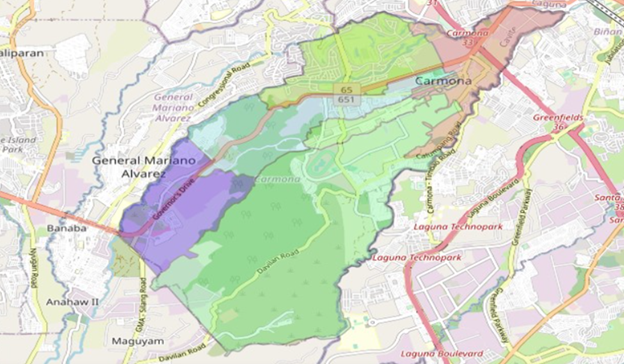
Figure 1. City of Carmona Map
Geography: The City of Carmona in the Province of Cavite is geographically located at approximately 14°19′ North latitude and 121°03′ East longitude on the island of Luzon. The municipal center sits at an elevation of about 23.1 meters (75.9 feet) above mean sea level, indicating that the area is relatively low-lying but not directly coastal.
Land and Political Subdivision: Today, the City is geopolitically composed of fourteen (14) barangays, namely Poblacion (Barangays 1 to 7), Rosario (Barangay 8), Maduya (Barangay 9), Cabilang Baybay (Barangay 10), Mabuhay (Barangay 11), Milagrosa (Barangay 12), Lantic (Barangay 13), and Bancal (Barangay 14).
Climate: Carmona experiences a tropical monsoon climate typical of the CALABARZON region, characterized by heavy rainfall during the southwest monsoon (Habagat) and frequent typhoon occurrences that may result in flooding, strong winds, and disruptions to school activities.
Economic Situation: One of the Philippines’ fastest-rising economic hubs, transitioning from an agricultural base into a bustling industrial and commercial center.

Figure 2. SDO Carmona City Profile and Particulars
The School Year 2025–2026 profile of SDO Carmona City reflects a predominantly public education system serving a total of 20,657 learners. Enrollment is concentrated at the elementary level, followed by junior and senior high school, indicating a stable progression across key stages. The inclusion of Alternative Learning System (ALS) learners demonstrates the Division’s commitment to inclusive and lifelong learning. Moreover, the number of schools, teachers, non-teaching personnel, and community learning centers indicates a stable and adequately supported education system responsive to learners’ needs.
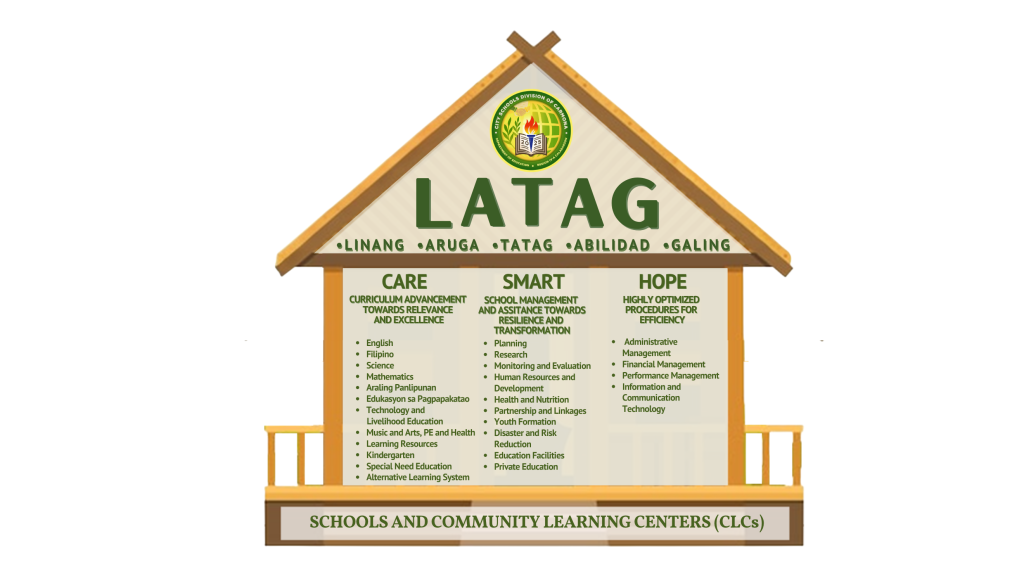
Figure 3. The LATAG Framework of the City Schools Division of Carmona
Conceptualized as a house-shaped structure, the framework represents a strong, stable, and nurturing foundation for quality basic education. At the apex of the structure is the official seal of the Division, depicting a torch and an open book that symbolize enlightenment and lifelong learning. Beneath the seal is the acronym LATAG, which represents the Division’s core values: Linang (Cultivate), Aruga (Care), Tatag (Resilience), Abilidad (Skill), and Galing (Excellence). These values serve as the guiding principles that inform all educational initiatives and interventions of the Division.
Supporting the structure are three major pillars that define the Division’s strategic domains. The first pillar, CARE (Curriculum Advancement towards Relevance and Excellence), focuses on strengthening the delivery of a quality, relevant, and learner-centered curriculum. It encompasses core learning areas, values and life skills education, and inclusive programs such as Kindergarten, Special Needs Education, and the Alternative Learning System, supported by the provision and continuous improvement of learning resources. The second pillar, SMART (School Management and Assistance towards Resilience and Transformation), emphasizes effective school governance and responsive institutional support. It covers planning, research, monitoring and evaluation, human resource development, health and nutrition, partnerships and linkages, youth formation, disaster risk reduction and management, education facilities, and private education. The third pillar, HOPE (Highly Optimized Procedures for Efficiency), ensures the efficient management of systems and resources across the Division. It includes administrative, financial, and performance management, as well as information and communication technology, to support accountable and streamlined operations.
At the base of the structure is the foundation labeled Schools and Community Learning Centers (CLCs), which represent the grassroots institutions that anchor the entire framework. These institutions serve as the primary implementers of the Division’s programs and the direct providers of educational services, ensuring that all learners are supported, nurtured, and provided with equitable access to quality education.